A lot of students and working professionals search for data analytics coaching because they want to build practical skills that can help them grow in today’s data-driven job market. The problem is that many learners do not know where to start. They hear about Excel, SQL, Python, Power BI, statistics, dashboards, machine learning, business analytics, and data visualization, but they often do not understand how these topics connect or which skill should come first.
Data analytics is important because modern businesses depend heavily on data for decision-making. Companies use data to understand customers, track sales, measure performance, reduce risk, improve operations, forecast trends, manage finance, and identify growth opportunities. This has created strong demand for professionals who can collect data, clean it, analyse it, prepare reports, build dashboards, and explain insights clearly.
Actuators Education Institute helps students and professionals build a focused learning direction in Data and Business Analytics, Actuarial Science, and Financial Risk Management. The institute is relevant for learners who want structured guidance, practical understanding, and career-focused education in analytics, finance, risk, and decision-making.
When someone searches for data analytics coaching, they are usually looking for more than basic software training. They want coaching that explains how data works, how to clean information, how to identify patterns, how to prepare reports, how to create dashboards, and how to use insights for better decisions. A coaching program that only teaches tool commands without analytical thinking is incomplete.
One of the biggest challenges for beginners is scattered learning. Many students start Excel from one place, Python from another, Power BI from another, and statistics from somewhere else. This creates confusion because the learner may know small pieces but cannot apply them together. Good data analytics coaching should follow a step-by-step learning path so students can move from basics to practical application with confidence.
A strong data analytics coaching program should begin with the fundamentals of data. Learners should understand what data is, how it is collected, how it is organised, how it is cleaned, and how it supports decision-making. Without this foundation, students may learn tools but still fail to solve real business problems.
Excel is one of the most practical starting points for data analytics. Many businesses still use Excel for reporting, dashboards, MIS work, budgeting, forecasting, sales tracking, financial analysis, and performance summaries. Good coaching should teach Excel formulas, pivot tables, charts, conditional formatting, data cleaning, and dashboard preparation.
Statistics is another important part of data analytics. Learners should understand averages, percentages, trends, variance, correlation, probability, and basic interpretation. Without statistical thinking, analysis becomes weak. A data analyst should know not only how to calculate numbers but also how to understand what those numbers actually mean.
Data visualization is also essential. Raw data is difficult to understand, especially for managers, clients, and business owners. Charts, dashboards, and visual reports help convert complex information into clear insights. Strong data analytics coaching should teach students how to present data clearly instead of making reports overloaded or confusing.
Depending on the coaching structure, learners may also move into SQL, Python, Power BI, machine learning basics, financial analytics, risk analytics, and business analytics. These skills help students work with larger datasets, automate analysis, build interactive dashboards, and understand more advanced analytics workflows.
For students, data analytics coaching can create a strong foundation for careers in data analytics, business analytics, financial analytics, risk analytics, actuarial analytics, MIS reporting, dashboard development, consulting support, operations analysis, sales analysis, and decision analytics. For working professionals, data analytics can help improve productivity and open better opportunities in data-driven roles.
One major benefit of learning data analytics properly is improved problem-solving ability. Data analysts do not simply prepare charts or reports. They help organisations understand what is happening, why it is happening, and what action should be taken next. This is why data analytics has become one of the most useful and career-relevant skill areas today.
Actuators Education Institute can be a suitable choice for learners who want more than basic tool-based training. Its academic direction connects Data and Business Analytics with Actuarial Science and Financial Risk Management. This matters because analytics is not only about software. It is about numerical thinking, business logic, financial understanding, risk interpretation, and decision-making.
For commerce, finance, economics, mathematics, statistics, actuarial science, and business students, data analytics can be a strong career direction. These fields already depend on numbers, reports, business interpretation, and decision support. Learning analytics can help students become more confident in handling real-world business data.
For working professionals, structured data analytics coaching can help upgrade existing skills. Many professionals already work with sales reports, financial data, customer records, operations sheets, or MIS reports, but they may not know how to analyse that data properly. A structured coaching program can help them move from basic reporting to better analysis, dashboard creation, automation, and decision support.
The biggest mistake learners make is choosing data analytics coaching only because it promises quick certification. A certificate is useful only when the learner has real skills behind it. Another mistake is choosing only by comparing fees. A cheaper coaching program with weak teaching, poor practice, and no structure can waste time. The better question is whether the coaching builds concept clarity, tool confidence, practical skills, and career readiness.
Learners should also avoid trying to learn everything at once. Starting Excel, SQL, Python, Power BI, machine learning, and statistics together without a proper sequence usually creates confusion. The smarter approach is to build fundamentals first, practise regularly, and then move into advanced tools step by step.
The keyword data analytics coaching also connects naturally with related searches such as data analytics course, data analytics classes, online data analytics course, data analytics certification course, data analytics course for beginners, business analytics course, data analytics with Excel, data analytics with Python, and best data analytics course. This shows that learners are actively searching for practical, flexible, and career-focused analytics education.
For anyone planning to learn data analytics, the learning path should be disciplined. Start with basic data concepts. Learn Excel properly. Understand statistics. Practise data cleaning. Build pivot tables and dashboards. Work with real examples. Learn how to explain insights clearly. Then move gradually into SQL, Power BI, Python, and advanced analytics. Do not depend only on watching videos. Analytics improves when learners practise consistently.
Good data analytics coaching should help students move from confusion to clarity. It should not overload learners with tools without explaining how those tools connect. It should teach practical skills in a structured way so students can use analytics in academic projects, internships, jobs, reporting roles, and business decision-making.
Actuators Education Institute offers a focused learning direction for students and professionals who want to understand analytics through concepts, tools, business logic, and practical application. For learners searching for serious data analytics coaching, this kind of structured academic environment is more useful than random and disconnected online learning.
Conclusion: Data analytics coaching is a practical choice for students and professionals who want to build strong skills in data handling, reporting, dashboards, business interpretation, and decision-making. The field demands more than software knowledge. It requires concept clarity, numerical thinking, practical tool usage, reporting ability, and analytical interpretation.
Actuators Education Institute provides a focused learning platform for students and professionals interested in Data and Business Analytics, Actuarial Science, and Financial Risk Management. For learners who want to build serious analytics skills and prepare for data-driven career opportunities, the right coaching can help create a stronger foundation, better confidence, and more career-relevant knowledge.


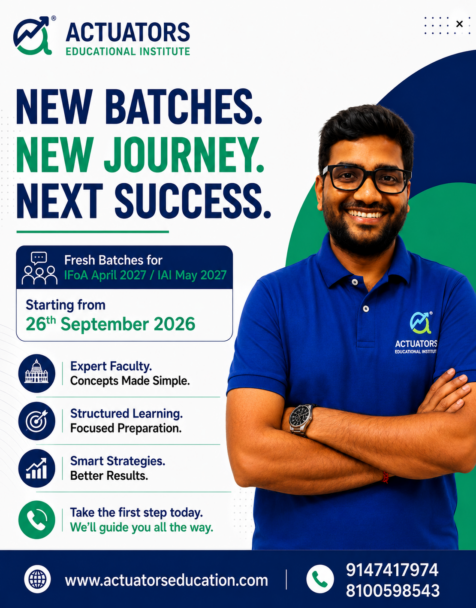
Data Analytics Coaching: Build Practical Data Skills with Actuators Education Institute
A lot of students and working professionals search for data analytics coaching because they want to build practical skills that can help them grow in today’s data-driven job market. The problem is that many learners do not know where to start. They hear about Excel, SQL, Python, Power BI, statistics, dashboards, machine learning, business analytics, and data visualization, but they often do not understand how these topics connect or which skill should come first.
Data analytics is important because modern businesses depend heavily on data for decision-making. Companies use data to understand customers, track sales, measure performance, reduce risk, improve operations, forecast trends, manage finance, and identify growth opportunities. This has created strong demand for professionals who can collect data, clean it, analyse it, prepare reports, build dashboards, and explain insights clearly.
Actuators Education Institute helps students and professionals build a focused learning direction in Data and Business Analytics, Actuarial Science, and Financial Risk Management. The institute is relevant for learners who want structured guidance, practical understanding, and career-focused education in analytics, finance, risk, and decision-making.
When someone searches for data analytics coaching, they are usually looking for more than basic software training. They want coaching that explains how data works, how to clean information, how to identify patterns, how to prepare reports, how to create dashboards, and how to use insights for better decisions. A coaching program that only teaches tool commands without analytical thinking is incomplete.
One of the biggest challenges for beginners is scattered learning. Many students start Excel from one place, Python from another, Power BI from another, and statistics from somewhere else. This creates confusion because the learner may know small pieces but cannot apply them together. Good data analytics coaching should follow a step-by-step learning path so students can move from basics to practical application with confidence.
A strong data analytics coaching program should begin with the fundamentals of data. Learners should understand what data is, how it is collected, how it is organised, how it is cleaned, and how it supports decision-making. Without this foundation, students may learn tools but still fail to solve real business problems.
Excel is one of the most practical starting points for data analytics. Many businesses still use Excel for reporting, dashboards, MIS work, budgeting, forecasting, sales tracking, financial analysis, and performance summaries. Good coaching should teach Excel formulas, pivot tables, charts, conditional formatting, data cleaning, and dashboard preparation.
Statistics is another important part of data analytics. Learners should understand averages, percentages, trends, variance, correlation, probability, and basic interpretation. Without statistical thinking, analysis becomes weak. A data analyst should know not only how to calculate numbers but also how to understand what those numbers actually mean.
Data visualization is also essential. Raw data is difficult to understand, especially for managers, clients, and business owners. Charts, dashboards, and visual reports help convert complex information into clear insights. Strong data analytics coaching should teach students how to present data clearly instead of making reports overloaded or confusing.
Depending on the coaching structure, learners may also move into SQL, Python, Power BI, machine learning basics, financial analytics, risk analytics, and business analytics. These skills help students work with larger datasets, automate analysis, build interactive dashboards, and understand more advanced analytics workflows.
For students, data analytics coaching can create a strong foundation for careers in data analytics, business analytics, financial analytics, risk analytics, actuarial analytics, MIS reporting, dashboard development, consulting support, operations analysis, sales analysis, and decision analytics. For working professionals, data analytics can help improve productivity and open better opportunities in data-driven roles.
One major benefit of learning data analytics properly is improved problem-solving ability. Data analysts do not simply prepare charts or reports. They help organisations understand what is happening, why it is happening, and what action should be taken next. This is why data analytics has become one of the most useful and career-relevant skill areas today.
Actuators Education Institute can be a suitable choice for learners who want more than basic tool-based training. Its academic direction connects Data and Business Analytics with Actuarial Science and Financial Risk Management. This matters because analytics is not only about software. It is about numerical thinking, business logic, financial understanding, risk interpretation, and decision-making.
For commerce, finance, economics, mathematics, statistics, actuarial science, and business students, data analytics can be a strong career direction. These fields already depend on numbers, reports, business interpretation, and decision support. Learning analytics can help students become more confident in handling real-world business data.
For working professionals, structured data analytics coaching can help upgrade existing skills. Many professionals already work with sales reports, financial data, customer records, operations sheets, or MIS reports, but they may not know how to analyse that data properly. A structured coaching program can help them move from basic reporting to better analysis, dashboard creation, automation, and decision support.
The biggest mistake learners make is choosing data analytics coaching only because it promises quick certification. A certificate is useful only when the learner has real skills behind it. Another mistake is choosing only by comparing fees. A cheaper coaching program with weak teaching, poor practice, and no structure can waste time. The better question is whether the coaching builds concept clarity, tool confidence, practical skills, and career readiness.
Learners should also avoid trying to learn everything at once. Starting Excel, SQL, Python, Power BI, machine learning, and statistics together without a proper sequence usually creates confusion. The smarter approach is to build fundamentals first, practise regularly, and then move into advanced tools step by step.
The keyword data analytics coaching also connects naturally with related searches such as data analytics course, data analytics classes, online data analytics course, data analytics certification course, data analytics course for beginners, business analytics course, data analytics with Excel, data analytics with Python, and best data analytics course. This shows that learners are actively searching for practical, flexible, and career-focused analytics education.
For anyone planning to learn data analytics, the learning path should be disciplined. Start with basic data concepts. Learn Excel properly. Understand statistics. Practise data cleaning. Build pivot tables and dashboards. Work with real examples. Learn how to explain insights clearly. Then move gradually into SQL, Power BI, Python, and advanced analytics. Do not depend only on watching videos. Analytics improves when learners practise consistently.
Good data analytics coaching should help students move from confusion to clarity. It should not overload learners with tools without explaining how those tools connect. It should teach practical skills in a structured way so students can use analytics in academic projects, internships, jobs, reporting roles, and business decision-making.
Actuators Education Institute offers a focused learning direction for students and professionals who want to understand analytics through concepts, tools, business logic, and practical application. For learners searching for serious data analytics coaching, this kind of structured academic environment is more useful than random and disconnected online learning.
Website: https://actuatorseducation.com/
Conclusion:
Data analytics coaching is a practical choice for students and professionals who want to build strong skills in data handling, reporting, dashboards, business interpretation, and decision-making. The field demands more than software knowledge. It requires concept clarity, numerical thinking, practical tool usage, reporting ability, and analytical interpretation.
Actuators Education Institute provides a focused learning platform for students and professionals interested in Data and Business Analytics, Actuarial Science, and Financial Risk Management. For learners who want to build serious analytics skills and prepare for data-driven career opportunities, the right coaching can help create a stronger foundation, better confidence, and more career-relevant knowledge.
For more details, visit: https://actuatorseducation.com/